Introduction
In the complex landscape of human emotions, having a tool to navigate and understand our feelings can be invaluable. Enter the DBT Emotion Wheel – a powerful instrument derived from Dialectical Behavior Therapy (DBT) that helps individuals identify, comprehend, and manage their emotions more effectively. Whether you’re considering therapy, currently in treatment, or simply looking to enhance your emotional intelligence, this guide will walk you through the intricacies of the DBT Emotion Wheel and how it can transform your relationship with your emotions.
What is the DBT Emotion Wheel?
The DBT Emotion Wheel is a visual tool developed as part of Dialectical Behavior Therapy, a type of cognitive-behavioral therapy initially created to treat borderline personality disorder but now used for various mental health conditions. The wheel provides a structured way to identify and categorize emotions, helping individuals move from vague feelings to specific, nameable emotions.
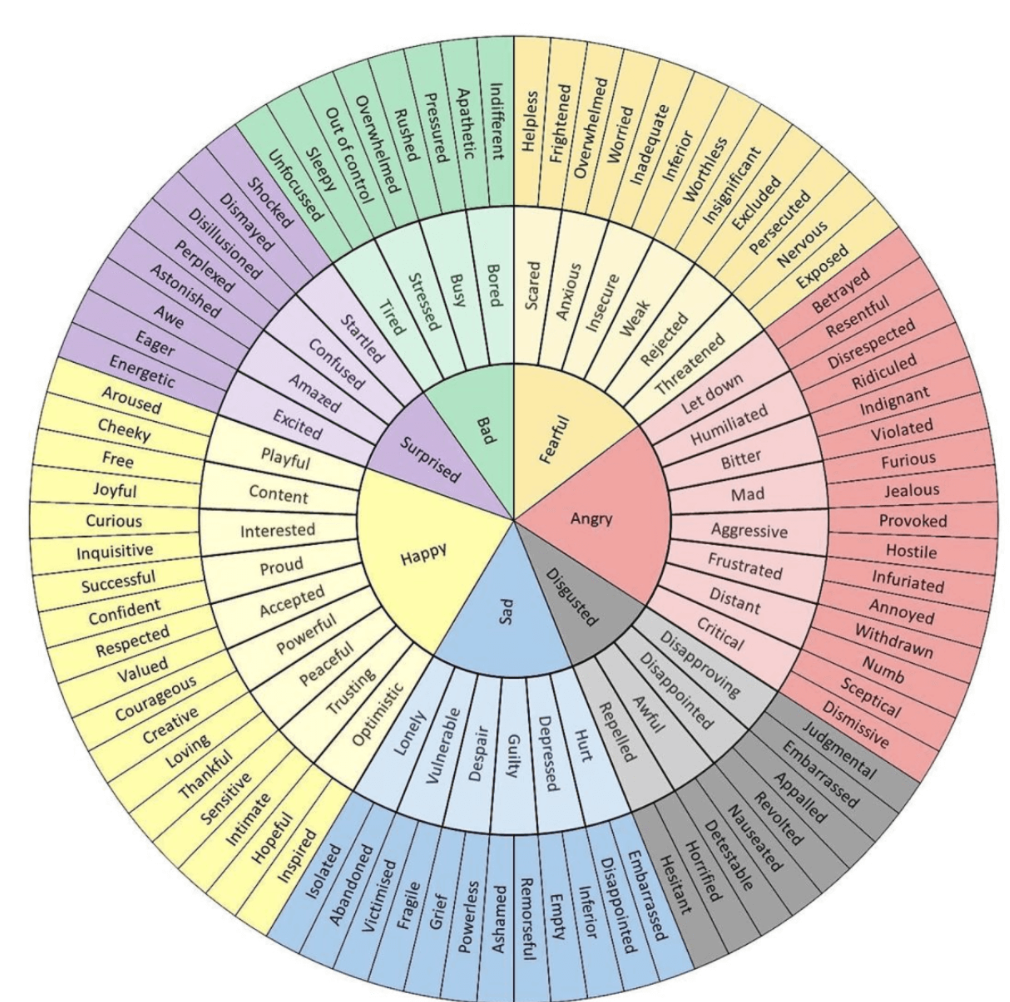
At its core, the DBT Emotion Wheel consists of eight primary emotions:
- Joy
- Sadness
- Fear
- Anger
- Disgust
- Surprise
- Shame
- Guilt
These primary emotions are then further broken down into more nuanced secondary and tertiary emotions, allowing for a more precise identification of what one is feeling.
The wheel’s design is intentional: it visually represents how emotions can blend and relate to one another, much like colors on a traditional color wheel. This visual representation helps users understand the complexity and interconnectedness of their emotional experiences.
The Importance of Emotional Awareness in Therapy
For individuals seeking therapy, developing emotional awareness is often a crucial step in the healing process. The DBT Emotion Wheel serves as an excellent tool for this purpose, offering several benefits:
- Improved Self-Understanding: By providing a comprehensive vocabulary for emotions, the wheel helps individuals articulate their feelings more accurately. This can lead to deeper self-insight and more productive therapy sessions.
- Enhanced Communication: Being able to precisely name emotions makes it easier to communicate with therapists, loved ones, and others about one’s emotional state.
- Emotion Regulation: Understanding the nuances of emotions is the first step in learning how to regulate them effectively. The wheel can help individuals recognize patterns in their emotional responses and develop strategies to manage intense feelings.
- Validation of Experiences: For many people, seeing their emotions represented on the wheel can be validating. It reinforces that their feelings are normal and shared by others, which can be particularly comforting for those struggling with mental health issues.
- Identification of Triggers: By consistently using the wheel to track emotions, individuals can begin to identify triggers for certain feelings, which is valuable information in therapy.
Breaking Down the DBT Emotion Wheel
To fully utilize the DBT Emotion Wheel, it’s essential to understand its structure and components. Let’s break it down:

Primary Emotions
These are the eight core emotions mentioned earlier. They form the innermost circle of the wheel and are considered the most basic, universal human emotions.
Secondary Emotions
Moving outward, the next ring contains secondary emotions. These are more specific manifestations of the primary emotions. For example, under “Joy,” you might find secondary emotions like “excited,” “proud,” or “content.”
Tertiary Emotions
The outermost ring contains tertiary emotions, which are even more specific. For instance, under the secondary emotion “excited,” you might find tertiary emotions like “enthusiastic,” “energetic,” or “elated.”
This structure allows users to start with a broad emotional category and narrow it down to a very specific feeling, promoting a nuanced understanding of their emotional state.
Practical Applications of the DBT Emotion Wheel in Daily Life
The DBT Emotion Wheel isn’t just a tool for therapy sessions; it can be integrated into daily life for ongoing emotional awareness and regulation. Here are some practical ways to use the wheel:
1. Daily Emotion Check-ins
Set aside time each day to consult the wheel and identify your current emotional state. This practice can increase your overall emotional awareness and help you track patterns over time.
Exercise: Create an “Emotion Journal” where you note your primary, secondary, and tertiary emotions at different points throughout the day. After a week, review your entries to see if you can identify any patterns or triggers.
2. Conflict Resolution
When in a disagreement with someone, use the wheel to precisely identify and communicate your emotions. This can lead to more productive conversations and resolutions.
Example: Instead of saying “I’m upset,” you might say, “I’m feeling disappointed and a bit anxious about our plans changing at the last minute.”
3. Mindfulness Practice

Incorporate the wheel into mindfulness exercises. As you meditate or practice deep breathing, use the wheel to label the emotions that arise without judgment.
Exercise: During a 10-minute mindfulness session, whenever you notice an emotion, silently label it using the wheel’s terminology. This combines emotional awareness with mindfulness practice.
4. Emotional Vocabulary Building
Challenge yourself to use more specific emotion words from the wheel in your daily conversations. This can enhance your emotional intelligence and communication skills.
Exercise: Each day, choose one emotion from the tertiary level of the wheel that you don’t often use. Try to incorporate it into a conversation or written communication that day.
The DBT Emotion Wheel in Therapy Sessions
For those in therapy or considering it, the DBT Emotion Wheel can be a valuable tool in sessions. Here’s how it might be used:
- Emotion Identification: At the beginning of a session, your therapist might ask you to use the wheel to identify your current emotional state. This can serve as a starting point for discussion and help track progress over time.
- Exploring Emotional Complexity: The wheel can help you and your therapist explore the nuances of your emotional experiences. For instance, you might realize that what you initially labeled as “anger” is actually a combination of “frustration,” “disappointment,” and “anxiety.”
- Challenging Cognitive Distortions: In cognitive-behavioral therapy, the wheel can be used to challenge cognitive distortions. By accurately labeling emotions, you can begin to separate feelings from thoughts and facts.
- Developing Coping Strategies: Once you’ve identified specific emotions, your therapist can help you develop targeted coping strategies for each. For example, the techniques for managing “overwhelm” might differ from those for handling “resentment.”
- Tracking Emotional Progress: By consistently using the wheel in therapy, you and your therapist can track changes in your emotional experiences over time, providing concrete evidence of progress.
Advanced Applications of the DBT Emotion Wheel
As you become more familiar with the DBT Emotion Wheel, you can explore more advanced applications:
1. Emotion Mixing
Just as colors can be mixed, emotions often blend. Use the wheel to identify and understand complex emotional states.
Exercise: Think of a recent complex emotional experience. Try to identify at least three emotions from different sections of the wheel that contributed to this experience. Reflect on how these emotions interacted.
2. Opposite Action
This DBT technique involves acting opposite to the urge associated with an intense emotion. The wheel can help you identify the emotion precisely, making it easier to determine the appropriate opposite action.
Example: If you identify feeling “isolated” (a form of sadness), the opposite action might be to reach out to a friend, even if you don’t feel like it.
3. Emotional Forecasting
Use the wheel to predict potential emotional responses to future events. This can help in planning and preparing coping strategies in advance.
Exercise: Think about an upcoming challenging event. Use the wheel to identify emotions you might experience. For each emotion, plan a potential coping strategy.
4. Empathy Building

The wheel can be a powerful tool for developing empathy. Use it to consider the potential emotions of others in various situations.
Exercise: Choose a character from a book or movie. At a pivotal moment in their story, use the wheel to identify the range of emotions they might be experiencing.
Limitations and Considerations
While the DBT Emotion Wheel is a valuable tool, it’s important to recognize its limitations:
- Cultural Differences: Emotions and their expressions can vary across cultures. The wheel may not fully capture emotional experiences in all cultural contexts.
- Individual Variations: Everyone experiences emotions differently. The wheel provides a general framework, but your personal emotional landscape may differ.
- Overwhelming for Beginners: The detailed nature of the wheel can be overwhelming for some. It’s okay to start with just the primary emotions and gradually work towards more nuanced identification.
- Not a Diagnostic Tool: While helpful for emotional awareness, the wheel is not a diagnostic tool for mental health conditions. Always consult with a mental health professional for diagnoses and treatment plans.
- Potential for Over-analysis: While reflection is valuable, excessive analysis of emotions can sometimes lead to rumination. Balance emotional awareness with other aspects of well-being.
Conclusion
The DBT Emotion Wheel is a powerful tool for anyone seeking to enhance their emotional awareness and regulation skills. Whether you’re in therapy, considering it, or simply looking to improve your emotional intelligence, the wheel offers a structured approach to understanding and managing your emotional experiences.
By providing a comprehensive vocabulary for emotions and a visual representation of their relationships, the DBT Emotion Wheel can transform your relationship with your feelings. From daily check-ins to advanced applications in therapy, this tool offers numerous ways to engage with your emotional life.
Remember, becoming proficient with the DBT Emotion Wheel is a process. Be patient with yourself as you learn to navigate its intricacies. With practice, you’ll likely find that you’re better able to identify, understand, and communicate your emotions, leading to improved relationships, more effective therapy sessions, and a greater sense of emotional well-being.
As you embark on this journey of emotional discovery, consider the DBT Emotion Wheel as your compass, guiding you through the complex terrain of human emotions. Whether you’re navigating the peaks of joy, the valleys of sadness, or the winding paths of more nuanced feelings, this tool can help light the way towards greater emotional awareness and, ultimately, a more fulfilling life.