So, on Friday we learned about something called the Transtheoretical Model for Changing Habits. The Transthereotical Model (TTM), also known as the stages of change model, is a theory of behavior change that describes how people progress through six stages as they change their behavior:
- Precontemplation: At this stage, people are not thinking about changing their behavior. They may not be aware of the problem, or they may not believe that change is possible.
- Contemplation: At this stage, people are aware of the problem and are considering changing their behavior. However, they are still weighing the pros and cons of change.
- Preparation: At this stage, people have made a decision to change their behavior and are making plans to do so. They may be gathering information, seeking support, or making small changes.
- Action: At this stage, people are actively changing their behavior. They may be following a plan, using coping strategies, or making other changes to their lifestyle.
- Maintenance: At this stage, people have been successfully changing their behavior for at least six months. They are working to maintain the change and prevent relapse.
- Termination: At this stage, people have been successfully changing their behavior for a long time and no longer need to actively work to maintain the change.
The TTM is not a linear model. People may move back and forth between stages as they progress through the change process. For example, someone who is trying to quit smoking may start in the precontemplation stage, then move to the contemplation stage, then back to the precontemplation stage, and so on. Eventually, they may reach the action stage and successfully quit smoking.
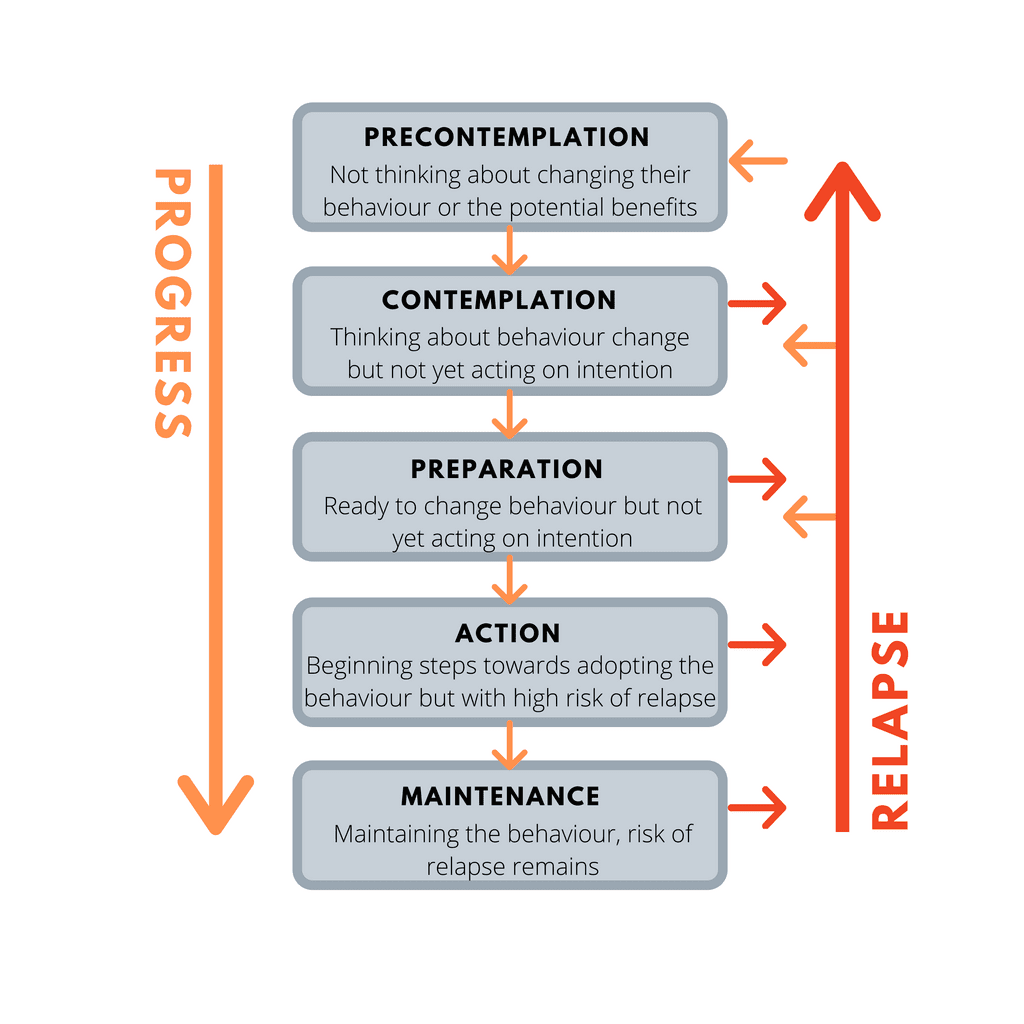
Here is a more detailed explanation of each stage of the TTM:
Precontemplation
People in the precontemplation stage are not thinking about changing their behavior. They may not be aware of the problem, or they may not believe that change is possible. For example, someone who is overweight may not be aware of the health risks associated with obesity, or they may believe that it is impossible to lose weight and keep it off.
Contemplation
People in the contemplation stage are aware of the problem and are considering changing their behavior. However, they are still weighing the pros and cons of change. They may be thinking about the positive aspects of change, such as improved health or increased self-esteem. They may also be thinking about the negative aspects of change, such as the effort required or the fear of failure.
Preparation
People in the preparation stage have made a decision to change their behavior and are making plans to do so. They may be gathering information about the change, seeking support from others, or making small changes. For example, someone who is trying to quit smoking may start reading books about quitting smoking, talking to other people who have quit smoking, or making a list of their triggers.
Action
People in the action stage are actively changing their behavior. They may be following a plan, using coping strategies, or making other changes to their lifestyle. For example, someone who is trying to lose weight may start following a healthy diet and exercise plan, or they may start tracking their calories.
Maintenance
People in the maintenance stage have been successfully changing their behavior for at least six months. They are working to maintain the change and prevent relapse. They may continue to use coping strategies or make other changes to their lifestyle. For example, someone who has quit smoking may continue to avoid their triggers and stay connected with other people who have quit smoking.
Termination
People in the termination stage have been successfully changing their behavior for a long time and no longer need to actively work to maintain the change. The new behavior has become a habit. For example, someone who has lost weight and kept it off for many years may no longer need to track their calories or follow a specific diet plan.
The TTM is a useful tool for understanding the process of behavioral change and for developing effective interventions. It can be used to help people at any stage of the change process.
I found it really enlightening to see the process drawn out plainly. I hope this helps others because it can be used for any habit change, not just recovery!

Discover more from Whispers of Insight
Subscribe to get the latest posts sent to your email.